316 contains molybdenum and generally offers better resistance to chloride-related pitting than 304. It is not corrosion-proof: temperature, chemical concentration, deposits, crevices and maintenance still matter.
Start with the exposure, not the grade label
Identify the water chemistry and cleaning chemicals, including their working concentrations, temperatures and contact times. Chloride-rich environments need particular attention. Material selection should consider the complete exposure rather than treating either grade as universally suitable.
Reference: Outokumpu — Corrosion resistance
Questions to include in your enquiry
Use the following questions to make the material discussion specific. If the information is not available, record the uncertainty instead of defaulting to a grade based only on the building type.
- Will the drain receive saltwater, brine or concentrated process liquids?
- What cleaning products are used, at what dilution and temperature?
- Can liquid or residue remain in sheltered areas between cleaning cycles?
- What material documentation does the project require?
Ask about the finished assembly
Request the proposed grade for the body, grate and other exposed components. Include the finish, weld treatment and maintenance instructions in the review. A sample photo cannot establish the alloy or demonstrate suitability for a particular chemical environment.
Turn the comparison into a specification
Ask for a documented material recommendation based on your actual exposure information. Keep the material certificate and approved drawing with the project records. If the environment is aggressive or uncertain, obtain a corrosion specialist's assessment before final selection.
Compare the details
| Question | 304 | 316 / 316L |
|---|---|---|
| What is the basic distinction? | A commonly used chromium-nickel stainless steel. | A molybdenum-alloyed stainless steel family. |
| What does this mean for the enquiry? | Establish whether the documented exposure is suitable. | Discuss improved chloride resistance, but still review the actual exposure. |
| Does the label confirm performance? | No: confirm grade, fabrication and service conditions. | No: “316” does not guarantee corrosion-free service. |
| What does the L mean? | 304L is a low-carbon grade variant. | 316L is a low-carbon variant; specify the exact grade required. |
| How should quotations be compared? | Use the same dimensions, finish and documentation requirements. | Use the same assembly scope so the comparison is meaningful. |
Reference: Outokumpu — Corrosion resistance · Outokumpu — Supra 316 and 316L grades · Outokumpu — Core 304 grades
Build an exposure profile before asking for a price
A useful material enquiry describes what reaches the drain during production and during cleaning. Separate normal use from occasional exposure: a drain may see diluted wash water every day but a stronger cleaning solution during a shutdown. Record unknowns explicitly so they can be resolved.
- Application: kitchen, food processing, pool deck or another wet area.
- Liquids: fresh water, brine, process residue or another identified liquid.
- Cleaning: product name, working dilution, contact time and rinse procedure.
- Operation: temperature range, frequency of use and periods of standing liquid.
Use the product photo to ask better questions
The reference photograph shows long parallel bars and narrow openings. It helps describe the preferred grating form, but cannot identify the alloy, confirm the finish specification or establish corrosion resistance. Ask for a bill of materials covering the channel, grating and other exposed parts. Request traceable material documentation where your project requires it.
Write a brief that separates known facts from assumptions
For example: “This channel is for a seafood preparation area. Brine may enter during cleaning. The cleaning chemical and dilution are attached. Please propose the material for the channel and grate, identify any information still needed, and provide the material documentation available for the quoted assembly.” This is a sample enquiry, not a recommendation that one grade suits every seafood facility.
Frequently asked questions
Is 316 always the right choice for a pool?
No. Provide the water chemistry, cleaning regime, temperature and installation conditions. A pool label alone does not establish material suitability; obtain a recommendation for the actual exposure.
Does 316L mean a higher load rating?
No. The L denotes a low-carbon variant. Grating load suitability needs separate evidence for the geometry, supports and tested assembly.
Can I choose between 304 and 316 from a photograph?
No. Use the specified grade and traceable material documents. Surface appearance is not reliable evidence of alloy identity.
What should I compare if the two quotations differ in price?
Check whether both cover the same dimensions, thicknesses, grate, finish, outlets and documentation. Resolve differences in scope before comparing the totals.
Ask Juanna about material selection
Use this outline to describe your project. Add the details you know and attach your drawing in your chosen messaging or email service.
Application and country:
Liquids or chloride exposure:
Cleaning product, dilution and temperature:
Channel dimensions and quantity:
Drawing / material documentation required:
Opens a draft in your chosen service. Nothing is sent automatically.
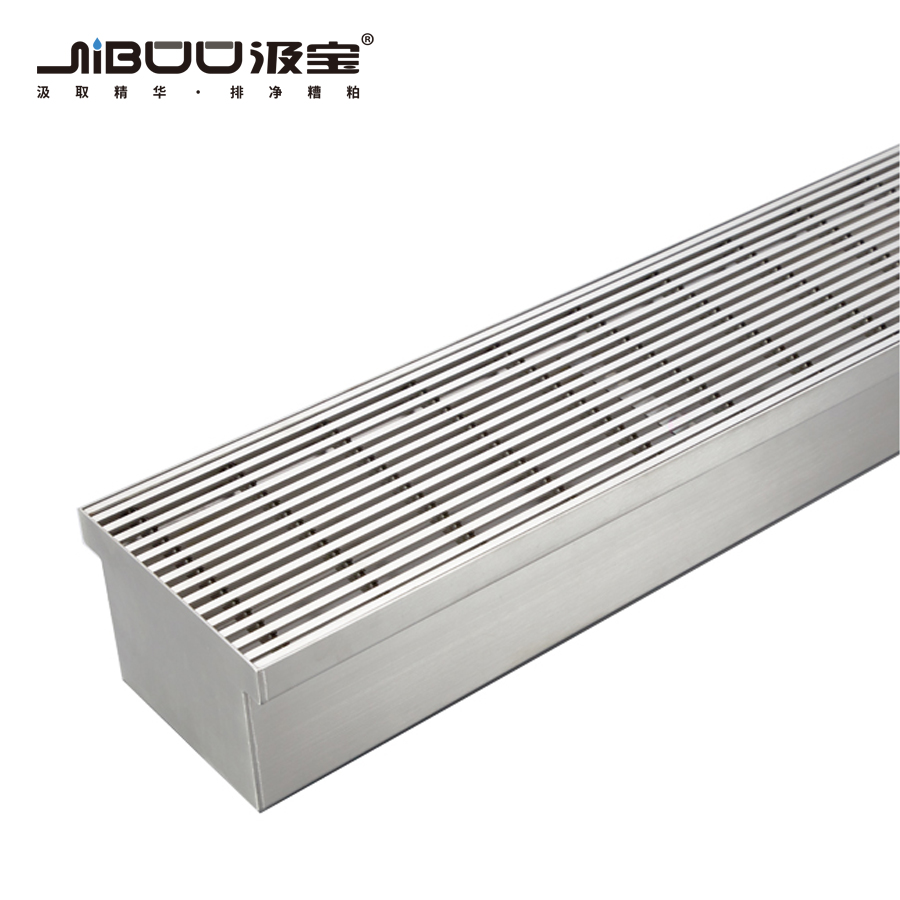
Reference detail: parallel-bar grating. The photograph helps explain the cover style; the alloy and finish must be confirmed in the product specification.
View product references ↗This guide supports project discussions. Final selection and installation should follow the approved design, the product documentation and applicable local requirements.